In the middle of my 2025 cancer diagnosis season, I did what a lot of us do when life gets scary. I tried to control the one thing I thought I could control. I stepped on the scale. Over and over. The number kept dropping. And based on how I felt, and how much I was eating, I knew exactly what was happening. I was losing muscle at an alarming rate.
After treatment, I had lost 50 pounds. But I am always a “bright side” guy. I decided right then that I wasn’t going to waste the weight loss. I knew that the weight loss would be great for my joints. I was going to use that to get back in shape.
So, I started working out. I started slow. 2 days a week. Then 3. Then 4. Now I’m up to 6 days a week. Slowly, my strength came back in tiny wins. A few more pushups. Stairs didn’t spike my heart rate. My shoulders sat taller. My jeans fit better, even when the scale acted like it was glued in place.
Bottom line: the scale can lie during body recomposition. So if you’re getting stronger, recovering better, and building habits you can repeat, you’re not failing. You’re changing, and that kind of change holds up under pressure.
The scale is a tool, but it is not a smart one
The scale can really mess with your head because it gives you a number. Numbers feel “official.” They feel final. But body weight is just one data point, and it’s a messy one.
Your body isn’t a math worksheet. It’s a living system. It holds water, stores fuel, digests food, repairs muscle, and responds to stress. That means you can do everything right for a week and still see the same number staring back at you.
Here are common reasons weight holds steady even when fat loss is happening:
- Water retention from harder workouts and sore muscles
- Salt intake (even one restaurant meal can swing things)
- Stress (your body loves to cling to water when you’re tense)
- Poor sleep (recovery tanks, cravings rise, water sticks around)
- Hormone shifts (normal, and often unpredictable)
- Travel (more sitting, different food, weird sleep)
- Digestion (what’s still in your system counts as weight)
If you need proof that “losing inches but not weight” is a real thing, this breakdown on why inches can drop while weight stays up lines up with what I see in real people all the time.
So yes, track weight if you want. Just stop treating it like a verdict.
How you can lose fat and not lose pounds
Body recomposition is the not-so-sexy process of building some muscle while dropping some fat. When that happens, the scale may barely move, because you’re trading one type of tissue for another.
Muscle is denser than fat. It takes up less space. That’s why your body can look tighter and feel stronger even if the scale stays flat.
This shows up a lot in two groups:
- Beginners, because almost any consistent strength work wakes the body up.
- People returning after time off, because muscle memory is real, and your body adapts fast when you start again.
If you’re lifting, eating enough protein, and moving most days, you might be changing shape without “losing weight.” That’s not a problem. That’s the point.
The weekly water-weight swing that messes with your head
Let’s talk about the sneakiest scale prank: water.
Hard workouts create tiny muscle damage. That’s normal. Your body sends fluid to help repair it. Higher carbs can also increase stored glycogen, and glycogen holds water. On top of that, one bad night of sleep can make you puffy, inflamed, and hungrier.
That’s why I coach the Three R’s like they’re part of training, because they are:
- Recharge: Sleep like it’s your job.
- Recover: Take rest days seriously, not as “skipping.”
- Relax: Get your nervous system out of red alert.
If the scale jumps after you start training harder, don’t panic. Your body might be healing, not gaining fat.
You’re not doing “nothing” when you rest. You’re building the engine that lets you keep showing up.
What body recomposition looks like in real life (even when the scale stalls)
Body recomposition, in one clear sentence: it’s losing fat and gaining muscle over time, so your body changes even if your weight doesn’t.
That “over time” part matters. Recomp is quiet. It doesn’t always throw confetti every Monday morning. But it shows up where it counts: daily life.
Here’s what I noticed first, and what many of my readers tell me too:

I could carry groceries without the awkward shoulder pinch. I walked upstairs without talking myself into it like a hostage negotiator. My posture improved, because my back got stronger. My joints complained less, because my hips and core started doing their jobs again. The mental side surprised me most, though. I felt more agency. More “I can handle stuff” energy. That’s health esteem in action.
Also, strength training isn’t just about looks. It’s about staying in the fight. Harvard Health talks about how strength work supports long-term health, including lowering risk for several chronic issues. Their piece on using strength training to help ward off chronic disease is a solid reminder that this is bigger than a mirror.
If this is you, progress is happening:
- Your waist or hips are shrinking, even slightly
- Your workouts feel smoother than last month
- You’re adding reps, weight, or better form
- You have more steady energy during the day
- Your clothes fit better in the “good” way
- Your sleep is improving, even if slowly
That’s not fake progress. That’s the kind you can build a life on.
Better ways to track progress than daily weigh-ins
Daily weigh-ins are like checking your retirement account every hour. It’s too much noise. I like weekly or biweekly check-ins, and I keep the process boring on purpose.
Here are better markers than the scale:
- Waist and hip measurements (once every 1 to 2 weeks)
- Progress photos in the same lighting (every 2 to 4 weeks)
- How clothes fit (pay attention, don’t obsess)
- Strength log (every workout, simple notes)
- Resting heart rate (a trend, not a daily mood swing)
- Step count (weekly average beats daily perfection)
- Energy, mood, and sleep quality (quick 1 to 5 rating)
Pick two or three. That’s it. More tracking is not always more truth.
How to weigh yourself without spiraling
If the scale triggers you, you don’t have to use it. Full stop. But if you do weigh in, use rules. Rules create calm.
My simple rules:
- Weigh at the same time, same conditions (morning, after bathroom, before food).
- Look at trends, not single days.
- Set a time window (4 to 6 weeks) before you judge results.
- Take scale breaks when motivation drops. Data is only helpful if you can handle it.
Fitness culture loves to shame people for having feelings. I’m not doing that. I’m coaching you to train smarter.
A simple plan for recomposition that you can actually stick with
You don’t need a perfect program. You need a plan you can repeat when life gets loud.
My recomposition framework is simple:
Strength train. Move daily. Eat enough protein. Protect recovery.
That’s it. Then I bring the mindset that keeps it going:
I focus on effort, because results lag. I train with purpose, because vanity runs out of gas. I keep a plan, because “winging it” turns into skipping. I rotate variety, because boredom kills consistency. I push intensity carefully, because I’m building longevity, not collecting injuries. I get real about where I am today, so I can improve from a true starting point. I stay flexible, because life changes, and I’m not quitting every time the calendar gets messy.
This is sustainable progress. Not punishment.
My basic weekly routine: strength, walks, and enough recovery to keep going
Here’s a sample week that works for a busy, over-40 life:
- Monday: Strength training (full body, 30 to 45 minutes)
- Tuesday: Easy walk plus mobility (20 to 40 minutes total)
- Wednesday: Strength training (full body)
- Thursday: Easy cardio or mobility (keep it light)
- Friday: Strength training (full body)
- Saturday: Longer walk, hiking, or “life cardio” (yard work counts)
- Sunday: Rest and recovery (the Three R’s, no negotiation)
If you’re starting from zero, start smaller. Two strength days is fine. Ten-minute walks count. Stack wins first, then build.
I do a lot of this at home. If you like guided workouts, BODi-style programs can be a solid option, because they remove decision fatigue. No hype needed. Just press play and work.
Nutrition that supports muscle and steady fat loss (without dieting yourself into the ground)
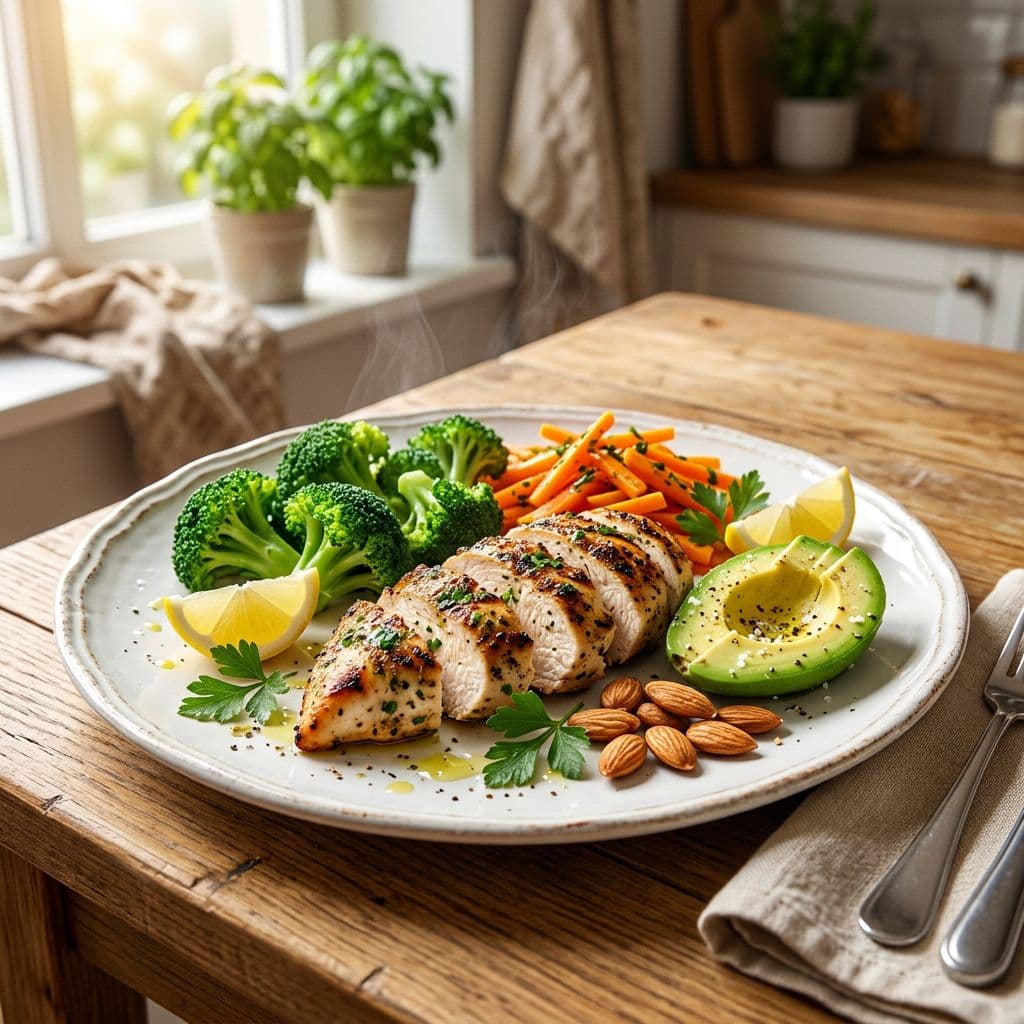
If fat loss is a goal, you need a small calorie deficit. Not a crash diet. Not a hunger contest. Just a steady, repeatable gap between what you eat and what you burn.
Here’s what I focus on:
Protein at each meal. Fiber most meals. Water daily. Mostly whole foods. Treats on purpose, not by accident.
A simple plate works:
- Protein: chicken, fish, lean beef, eggs, Greek yogurt, tofu
- Fiber: berries, beans, veggies, oats, potatoes with the skin
- Fats: olive oil, avocado, nuts (portions matter)
- Carbs: rice, fruit, bread, pasta, potatoes (fuel your training)
If you want a reputable refresher on the basics, Mayo Clinic has a clear guide to healthy weight-loss basics and habits.
One more thing: if you have a medical condition, a cancer history, or you’re on meds that affect weight, talk with your clinician. Your plan should fit your real body, not an internet template.
When it is time to adjust, and when it is time to keep the course
This is where most people lose the plot. They don’t fail because they’re lazy. They fail because they change everything at once, then burn out.
So I use a simple decision guide. Green flags mean stay the course. Red flags mean adjust one thing.
Also, hear me on this: Don’t give up just because the scale is being dramatic. Do your best, then let time do its job.
If you want extra perspective on how recomp can hide on the scale, this piece on whether you might be in a recomp phase matches what many lifters experience.
Green flags that tell me recomposition is working
- Your lifts are going up, even slowly
- Your waist is shrinking or your clothes fit better
- You’re sleeping better and waking up less wrecked
- You have more daily energy and fewer “crash” afternoons
- Your cravings feel calmer and more predictable
- Your workouts feel smoother, less like a fight
- Your blood pressure or labs improve, if you track those with your doctor
Progress can be slow and still be real. Boring progress is often the best kind.
Red flags that mean I should change one thing (not everything)
- No strength progress for 6 to 8 weeks
- Measurements and photos flat for a full month
- Constant soreness that never eases
- Sleep is bad most nights
- Stress stays high with no recovery plan
- Protein is consistently low
- Weekends turn into big overeating swings
When I see red flags, I don’t start over. I make one change:
Add 2,000 steps a day. Tighten portions at dinner. Plan a higher-protein breakfast. Take a deload week. Swap in new exercises for variety. Set a hard bedtime alarm. Pick one. Run it for two weeks. Then re-check.
Balance beats chaos.
Conclusion
Back in 2025, the scale didn’t reward my effort the way I wanted. Still, my body was rebuilding under the hood, and my life got better because of it. That’s body recomposition, and it counts.
For the next seven days, pick one simple action: track waist once, lift three times, or protect sleep like it’s training. Keep it clean. Keep it doable. Build health esteem by proving to yourself that you show up.
If you want backup and a plan that fits real life, reach out or connect with my community at Decide to Thrive. I’ll help you keep it sustainable, strong, and honest.