Back in the day, my “supplement plan” was a jug of water, a banana, and whatever powdered drink mix was on sale next to the cassette tapes at the grocery store. These days, I read labels like my old car manual, because I’m not chasing beach abs anymore. I’m chasing agency over aesthetics. I want my body to feel like it’s mine again.
That’s why I’m interested in high flavanol cocoa, and why a product like Black Forest Supercharged Cocoa gets my attention with its big “1200mg of ultra pure flavanols and flavonoids” claim. Cocoa is also an ancient fermented food made from cacao (Theobroma cacao). The useful stuff people talk about tends to be flavanols like catechins and epicatechins, which are part of the flavonoid family (often called flavan-3-ols).
So let’s keep it simple and honest. I’m going to explain what “high flavanol cocoa” really means, what the research suggests (heart and circulation, inflammation, insulin response), and how I’d use something like this without turning it into a second job.
What “high flavanol cocoa” actually means, and why the number matters
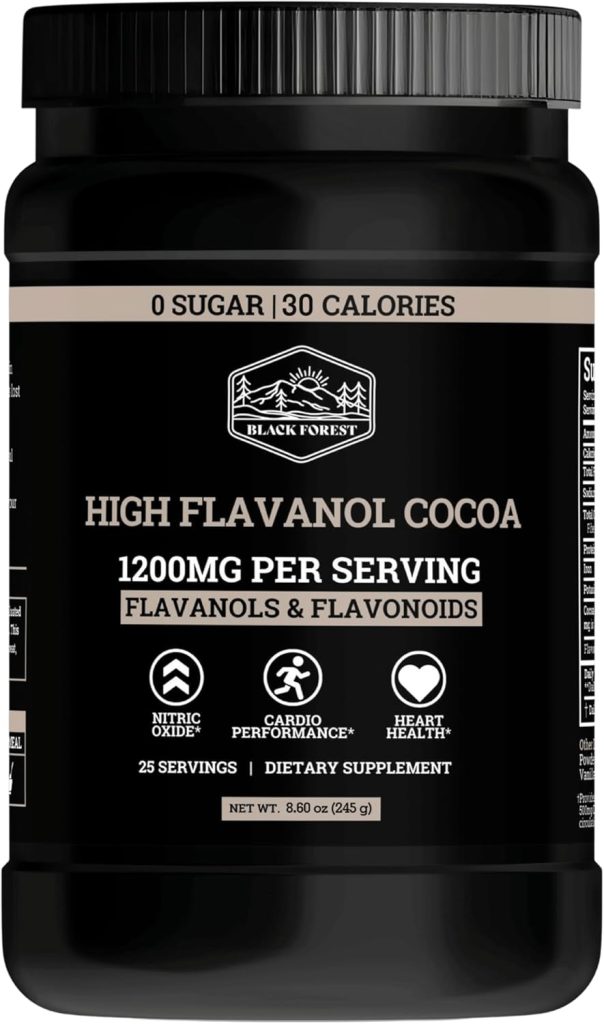
When most people say “cocoa,” they picture a comforting mug, a candy bar, or that baking powder that’s been in the pantry since the Bush administration. High flavanol cocoa is a different beast. Not “magic,” not “detox,” just different.
Flavanols are plant compounds found in cacao. They’re often discussed for vascular support because they can interact with the inner lining of blood vessels (the endothelium). The catch is that processing matters. Many cocoa products get treated in ways that can reduce flavanol levels, and plenty of chocolate products also come with a sugar payload that’s basically a prank.
That’s why the “1200mg” number matters. It’s supposed to represent a meaningful dose of these cocoa compounds in a controlled, measurable way. It also happens to be a marketing hot spot because big numbers sell. My rule is simple: a big claim is only as good as the testing behind it.
For a plain-English explanation of what brands mean when they say “high flavanol,” I like seeing how others define it and what to look for, even if I don’t buy from them. This overview of what high flavanol cocoa means is a decent starting point for the vocabulary.
Flavanols vs cocoa powder vs chocolate bars, the part labels rarely make clear
Here’s the label math most people never get taught.
Cocoa flavanols are not the same thing as “dark chocolate.” Dark chocolate can be a decent source, but it’s a wild west category. One bar might have meaningful flavanols, another might be mostly calories, sugar, and good PR.
Regular cocoa powder sits in the middle. It can contain flavanols, but the amount depends on how it was processed and stored. Meanwhile, high flavanol cocoa products try to standardize and protect those compounds, so you can actually know what you’re getting per serving.
Also, flavanols like epicatechin are water-soluble plant compounds. That sounds nerdy, but it matters because it affects how they behave in the body and how they show up in food and supplements.
If you want the benefit people are chasing, I’d focus on two things first:
- Declared flavanol content (not just “cacao” or “antioxidants”)
- Added sugar (because a sugar bomb can cancel the whole “health tool” vibe)
How to sanity-check a “1200mg” claim before you spend a dime
If I’m going to put something in my body every day, I want receipts. Here’s what I look for when a product claims 1200mg of flavanols and flavonoids:
- Third-party testing or a certificate of analysis (COA): I want to see batch testing, not vibes.
- A clear serving size: “1200mg per serving” means nothing if the serving is three heaping scoops.
- A definition of what’s being measured: Is it total cocoa flavanols? Or a broader “flavonoid blend” number?
- Consistency across batches: If one tub is strong and the next is weak, it’s not a routine tool.
- A realistic dose for real life: More isn’t always better if it wrecks your stomach or your sleep.
Big numbers feel powerful. Consistent habits are powerful. I’ll take the second one every time.
The health benefits people want from cocoa flavanols, and what studies actually suggest
When people talk about high flavanol cocoa, the wish list usually looks like this: better circulation, healthier blood pressure, calmer inflammation, improved insulin response, maybe even some mental clarity.
The research doesn’t promise miracles, but it also isn’t just folklore. Cocoa flavanols have been studied in controlled trials for things like:
- Endothelium-dependent vasodilation (your vessels’ ability to relax and widen)
- Platelet activation (how “sticky” platelets are, which relates to clotting)
- Inflammation markers (signals tied to long-term heart and metabolic health)
- Blood pressure changes (often modest, sometimes meaningful)
- Insulin resistance and cardiometabolic markers (how the body handles blood sugar and related risk markers)
A lot of these results show up as improvements in markers, not dramatic “before and after” stories. That’s fine by me. I’m building a foundation, not filming a transformation montage.
Heart and circulation support, think blood flow and vessel function
The endothelium is basically the vessel lining that helps your arteries behave. When it’s working well, vessels can relax and widen when they need to. When it’s not, everything gets a little stiffer, and the system has to work harder.
Some controlled trials have found cocoa flavanol intake can improve measures of endothelial function in adults. One well-known example is the Flaviola Health Study, which looked at vascular function and risk scoring in healthy men and women. You can see the citation and summary on the Flaviola study page on PubMed.
Now, does that mean you’ll feel your veins “opening”? No. Most of us won’t notice that directly. Still, better vessel function can show up in regular-life ways, like feeling a bit less “tight” during exercise, or just having better tolerance for activity. That’s not a medical claim, it’s how people often describe the difference when circulation and training recoveries improve.
Also worth saying out loud: cocoa has been studied for platelet function too, which is one reason I take the safety notes seriously (more on that later).
Blood pressure, inflammation, and metabolic health, the “quiet wins” category
If you’re reading this, you might not need fireworks. You might want quiet wins, the kind that add up.
Research reviews and trials have reported modest blood pressure improvements in some groups using cocoa products or cocoa flavanols. In other studies, researchers saw shifts in inflammation-related markers and endothelial dysfunction markers, including trials that used specific flavonoids like epicatechin (a key cocoa flavanol) in adults with elevated blood pressure.
Then there’s the metabolic side. Cocoa flavanol intake has been studied in relation to insulin resistance and cardiometabolic biomarkers. The takeaway I keep coming back to is that results can vary a lot depending on:
- Dose
- Baseline health (your starting point matters)
- What else is going on in your diet and lifestyle
So if you’re expecting a high flavanol cocoa drink to “fix” a high-stress life, it’s going to disappoint you. If you’re expecting it to support your long-game habits, it has a better shot at being useful.
Big-picture evidence, what large trials like COSMOS help answer (and what they don’t)
This is where I get extra skeptical, in a friendly way.
Small studies can be promising, but large trials help answer the question people actually care about: “Does this change real outcomes over time?”

The COSMOS trial (COcoa Supplement and Multivitamin Outcomes Study) is a major example. It randomized over 20,000 older adults in the US and tested a cocoa extract supplement that delivered 500 mg/day of cocoa flavanols, with a randomized, double-blind design. If you want the details straight from the paper, here’s the COSMOS randomized clinical trial article.
Two important points for a product like Black Forest Supercharged Cocoa:
- COSMOS studied 500 mg/day, not 1200 mg/day.
- A higher number might be fine for some people, but it’s a different dose, so I’d approach it thoughtfully.
Long-term trials are why I don’t roll my eyes at cocoa flavanols the way I roll my eyes at “moon dust” supplements. Somebody actually put real money and rigor into studying this category.
How I’d use Black Forest Supercharged Cocoa in real life (without turning it into a whole project)
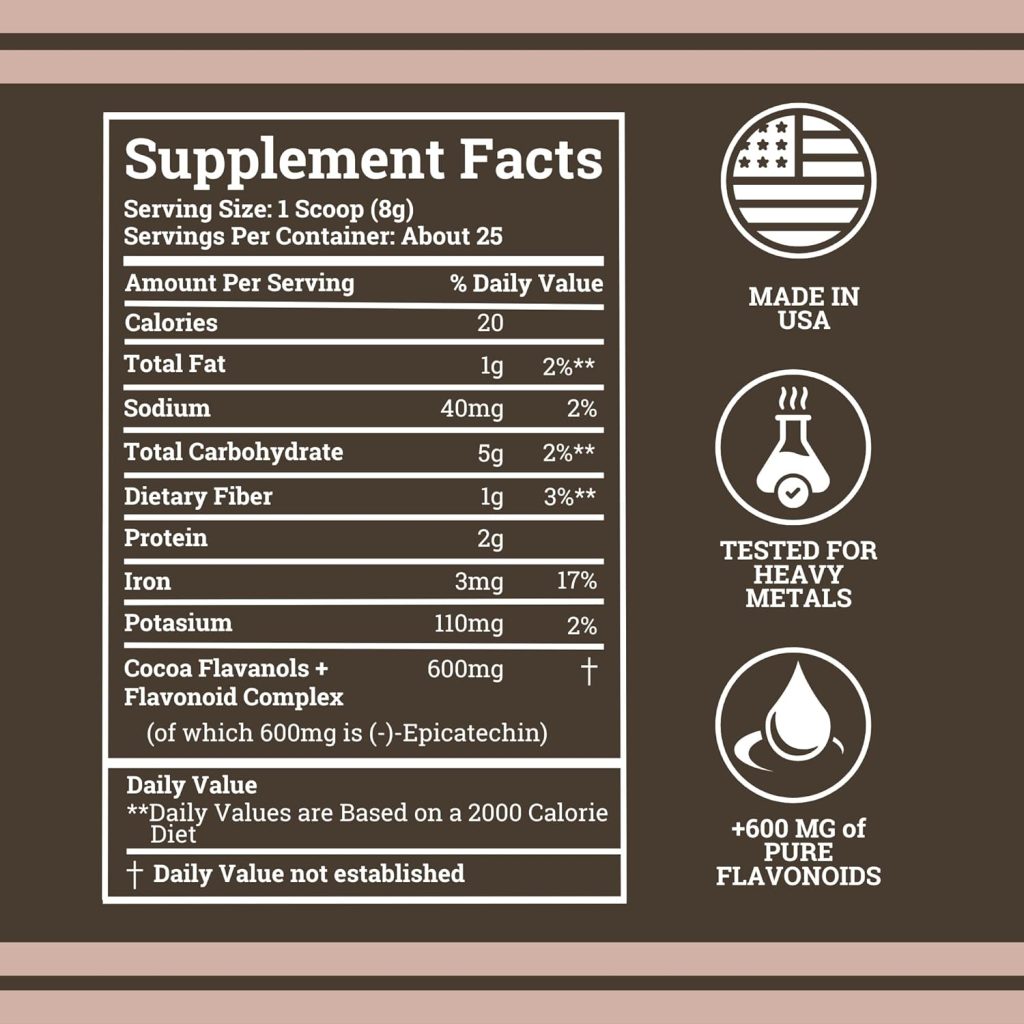
If a routine needs a spreadsheet, I’m out. I’ve been through cancer recovery, and I’ve learned the hard way that “perfect plans” collapse on a bad day.
So here’s my approach. I treat high flavanol cocoa like a practical tool, kind of like keeping a resistance band in the trunk. It’s there to support the basics, not replace them.
A few real-life factors matter with cocoa products:
- Stimulants: Cocoa can contain caffeine and theobromine. Some people feel great, others feel wired.
- Digestion: Cocoa can bother reflux-prone stomachs.
- Medication interactions: Cocoa flavanols have been studied for platelet activity, blood pressure, and insulin response, so I’d be careful if I’m taking meds in those lanes.
If you’re on blood thinners, antiplatelet meds, blood pressure meds, or diabetes meds, I’d at least ask a clinician who knows your history. That’s not me being dramatic, that’s me being a grown-up.
For a bigger picture view of how cocoa flavanols may affect microvascular function (including blood flow in smaller vessels), I found this open-access systematic review in Nutrition Journal helpful context.
A simple routine that makes it easy to stick with, even on low-energy days
Consistency beats intensity. Also, some days we’re operating on dial-up speeds.
When I want this to be repeatable, I pick one of these options and move on with my life:
Option 1: Hot water cocoa I stir it into hot water first. Then I add milk or a milk alternative if I want it smoother. This is the “I need something warm and easy” method.
Option 2: Smoothie add-in I add a serving to a simple smoothie with frozen berries and protein. If you already do smoothies, this is almost invisible effort.
Option 3: Yogurt or oats I mix it into Greek yogurt or oatmeal. It tastes like dessert, but it behaves like breakfast.
The trick is pairing it with an anchor habit. For example, I’ll tie it to a morning walk, post-workout protein, or that afternoon slump window when I’m tempted to snack like a raccoon in a gas station.
Who should slow down, start low, or ask their doctor first
Some people can start with the full serving and be fine. Others should treat it like spicy food at a new restaurant, start small and see how the night goes.
I’d personally slow down and use extra caution if any of these are true:
- You take anticoagulants or antiplatelet meds (because cocoa has been studied for platelet activation)
- You take blood pressure meds (because cocoa flavanols can modestly affect blood pressure in some people)
- You take diabetes meds (because insulin response and cardiometabolic markers show up in the research)
- You deal with reflux, a sensitive stomach, or migraines triggered by cocoa
- You’re pregnant or nursing (ask your clinician first, especially with high-dose extracts)
- You have a history of kidney stones, and you’re concerned about oxalates (check the brand’s FAQ or testing)
If you want an example of how supplement claims show up in retail listings (and why I want COAs), look at almost any cocoa flavanol product page. Even big retailers can have inconsistent details. This kind of cocoa flavanol supplement listing is exactly why I don’t buy on hype alone.
My bottom line, where this fits in a long-game health plan
I don’t do “gear for the sake of gear.” I’m interested in tools that keep the hinges from creaking, especially when life gets loud.
High flavanol cocoa looks promising for vascular and cardiometabolic markers, and the science world has taken it seriously enough to run large, long-term trials. That matters. At the same time, a 1200mg product is a strong dose on paper, and paper doesn’t know your sleep, your meds, or your stress level.
So where does Black Forest Supercharged Cocoa fit for me?
It’s a support tool, not a shortcut. If I enjoy it, tolerate it, and it helps me stay consistent with better daily choices, it’s worth considering. If it turns my stomach or wrecks my sleep, it’s not “discipline” to force it. It’s just stubbornness wearing a gym shirt.
If you want a broader look at flavan-3-ols (the category that includes cocoa flavanols) and how intake relates to cardiovascular benefit across studies, this flavan-3-ols meta-analysis is a useful read for context.
Conclusion
High flavanol cocoa is basically cocoa with the helpful compounds kept front and center, especially flavanols like catechins and epicatechins. The most plausible benefits show up in research around blood flow and vessel function, with possible modest support for blood pressure, inflammation markers, and insulin-related measures. Big trials like COSMOS exist because we need long-term answers, not just short-term excitement.
If you try Black Forest Supercharged Cocoa, I’d treat it like part of the foundation: sleep, movement, food quality, and stress management still run the show. Give it a few weeks, track energy, sleep, cravings, and workouts, then adjust without guilt. The goal is more agency in your own body, not another rule to fail.