Last week I hit that familiar end-of-day wall. I was tired, hungry, and doing the fridge stare like it was going to offer counseling. I found a sad container of leftovers, half an avocado with a browning face, and a cut onion that had basically turned my crisper drawer into a prank.
It reminded me of the old days when you’d print MapQuest directions, miss one turn, and suddenly you’re holding eight useless pages like they betrayed you. That’s what food waste feels like to me, tiny betrayals stacked up, mostly because life got busy.
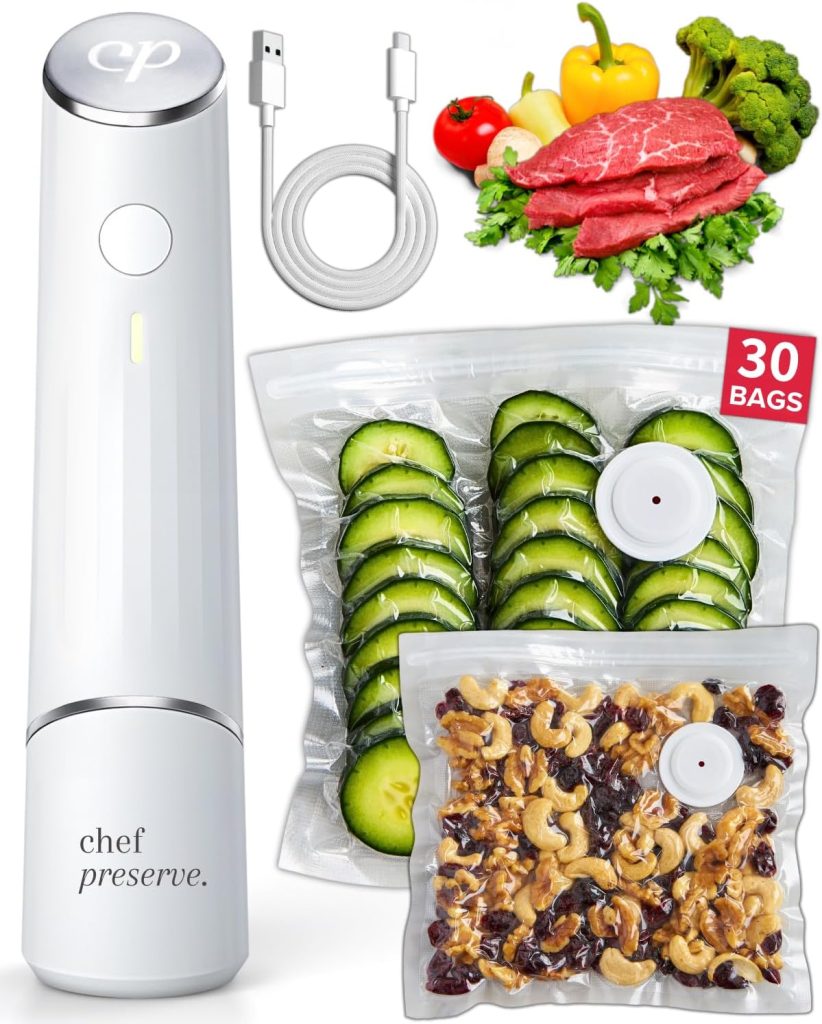
Bottom line: Chef Preserve is a handheld food saver tool that helps remove air and seal food so it stays fresh longer. It’s a good fit for busy households, meal preppers, and anyone tired of tossing “perfectly fine yesterday” food. For me, the big win isn’t kitchen perfection, it’s Agency over Aesthetics, less chaos, fewer last-minute grocery runs, and one less thing to manage on a 2 out of 10 day.
Why I started using Chef Preserve in the first place (and what problem it actually solves)
I don’t use gear for the sake of gear. I’ve lived through enough fitness and wellness trends to know that most of them are loud, expensive, and collect dust. Chef Preserve stuck because it solves a boring problem that keeps showing up: food spoils faster than my intentions.
When food dries out, gets “fridge flavored,” or turns slimy, it’s not just gross. It chips away at the foundation. If I don’t have decent food ready to go, I’m more likely to grab takeout, skip protein, and call it “fine.” It’s not a moral failing, it’s just momentum. And momentum matters for Health Esteem, that quiet confidence that I can take care of myself even when the week is messy.
Chef Preserve helps me keep food in the “still good” zone longer, so my fridge stops feeling like a science project. It also helps with smells. Sealed food is just… contained. That sounds obvious, but it’s huge when you’re trying to eat at home without turning meal prep into a part-time job.
Leftovers don’t usually die because we’re irresponsible. They die because tomorrow shows up with meetings, family stuff, and a brain that’s already spent.
The cost isn’t only the money in the trash. It’s the time you waste re-cooking, the extra grocery trip because you’re out of “real food,” and the decision fatigue when you open the fridge and everything looks questionable. Then takeout starts to feel like relief.
I’ve had plenty of 2 out of 10 days, especially in the seasons of life where my health was a full-time thought. On those days, cooking is not happening. If I can grab sealed leftovers that still smell normal and taste normal, I can still eat like an adult. That’s not a small win, that’s a lifeline.
Who gets the most value from a handheld food saver tool
This kind of tool isn’t just for people who prep 21 identical containers on Sunday. I’m not that guy, and I’m not trying to become him.
Chef Preserve has made the biggest difference for people like us:
Busy parents who don’t want to throw out the “backup dinner” they hoped to serve. People cooking for one, who always end up with extra portions. Empty nesters who are tired of buying produce that goes bad before they use it. Meal preppers who want food to taste like food, not like the inside of the fridge. Anyone trying to eat at home more often without making it their whole personality.
If you want less waste and more control, it fits the mission.
Chef Preserve, explained simply: what it is, how it works, and what makes it different
Chef Preserve is a handheld food saver tool that helps remove air from a compatible bag or container, then seals it. That’s the whole thing. No magic. No miracle claims. It’s just reducing air exposure, which can help food stay fresh longer and help reduce freezer burn.
I like handheld because I’ve owned bulky gadgets before. Big vacuum sealers can work great, but they’re the kitchen version of a desktop computer tower from 2002. Useful, yes, but it takes up space, and you don’t always want to drag it out for a half onion and some leftover rice.
Chef Preserve feels more like the flip phone phase of tech: simple, small, and it does the job without demanding a lifestyle change. I can keep it in a drawer, use it fast, and move on with my life.
Also, the “different” part for me is psychological. When sealing is easy, I actually do it. When it’s a whole production, I don’t. The best system is the one you’ll use when you’re tired.
What’s in the box and what you need to get started
Bundles can vary, so I always tell people to check what comes with the specific Chef Preserve package they’re buying. In general, you can expect some mix of:
A handheld sealing device. Compatible bags and or containers (depending on the bundle). A way to power it (often rechargeable, sometimes batteries, depending on the model). Basic instructions for sealing and care.
My favorite part is the storage footprint. It’s small enough to live in a drawer, which matters if your kitchen is already full of gadgets you swore you’d use.
My 60-second routine: sealing leftovers without making it a whole project
This is the routine that stuck for me, because it’s boring and fast:
- I portion the food I’ll actually eat (not the fantasy portion).
- I put it into the compatible bag or container.
- I seal it with Chef Preserve.
- I label it with a marker (date plus what it is).
- I fridge it or freeze it.
One tiny habit makes this easy: I keep the device and a marker in the same spot, always. If I have to hunt for either, my brain goes back to dial-up mode.
Compared to old school methods, this feels cleaner. I’m not wrestling with plastic wrap, and I’m not hauling out a clunky machine for one serving of chicken and rice.
Where Chef Preserve earns its keep in real life (my favorite use cases)
This is where the tool earns its keep for me, because it shows up in the exact places I used to waste food. Not theoretical, not “best practices,” just real life.
I’ll say the quiet part out loud: results depend on what you’re sealing and how you store it. Some foods are just fragile. Some leftovers don’t reheat like a dream no matter what you do. Chef Preserve doesn’t change reality, it just helps me keep food in better shape so I’m not tossing it as often.
And when I waste less, I also stress less. That matters for mental clarity, especially when life is already loud. Small systems like this support sustainable progress, because they remove friction from the day.
Meal prep and protein: keep cooked food tasting normal, not “fridge flavored”
Cooked proteins and staples are where I notice the biggest day-to-day payoff. Think chicken, turkey, beans, rice, and chopped veggies. When I seal them, I get less drying out and less odor transfer.
That “fridge flavored” taste is real. It’s like your food is slowly downloading the smell of everything around it. Sealing helps keep it tasting like what it is.
On workdays, this makes grab-and-go meals easier. I can pull out a sealed portion, reheat it, and add something simple, like fruit, yogurt, or a bagged salad. It’s not fancy, it’s functional. Functional is my love language in February.
Produce and “small leftovers”: the half-used stuff that usually gets tossed
This is the section of the fridge where good intentions go to die. Half an onion. A lemon that’s been cut and forgotten. A few herbs that cost five bucks and last five minutes.
Sealing helps with that “small leftovers” category. A few practical notes that have helped me:
I don’t seal warm food, I let it cool first. I pat greens and herbs dry before storage, water is not our friend here. I store wet sauces separately when I can, then combine later. With avocado, I keep expectations realistic. It can still brown, but sealing helps me slow it down compared to leaving it exposed.
Cheese chunks, cut peppers, and citrus have been solid wins for me. It’s less about making produce immortal and more about giving myself a better chance to use it.
Freezer wins: reduce freezer burn and make “future me” grateful
Freezer burn is the worst kind of surprise. You open a bag of food you were proud of saving, and it looks like it lost a fight in a snowstorm.
Chef Preserve helps me reduce freezer burn by limiting air exposure. I use it for berries, bread, portioned soups, and cooked meats. Two simple habits make a big difference:
I label dates, because time gets weird in the freezer. I freeze bags flatter when I can, they stack better and thaw faster.
Then I rotate older items forward. Future me doesn’t need a pep talk, he needs edible food on a weekday.
Is Chef Preserve worth it for you, and how to buy without getting duped by hype
I’m not here to sell you a fantasy. I’m also not an influencer doing kitchen gymnastics for a discount code. I’m just a regular guy who got tired of throwing money away in the form of spoiled food.

Chef Preserve passed my skeptical filter because it’s small, it’s quick, and it supports the kind of boring consistency that keeps life stable. That stability matters if you’re trying to build health for the long haul, especially if you’ve had your own wake-up calls.
Full disclosure, if I share an affiliate link on my site, I may get a small kickback if you buy through it. It helps keep the lights on here so I don’t have to start a “no excuses” bootcamp, which would be a personal low point.
Quick “yes or no” checklist before you spend a dime
Here’s the simplest way I know to self-qualify.
- Yes, it’s probably worth it if you regularly throw out leftovers, you cook at home a few times a week, you meal prep sometimes, you want fewer grocery runs, or you hate clutter and want a small tool.
- Maybe not if you rarely store food, you already own a full-size vacuum sealer you love, or you don’t want any extra steps at all, even small ones.
If sealing sounds like “one more thing,” that’s fair. The bar is on the floor. If you walk over it, you’ve won.
The realistic limits, so you don’t blame the tool for being a tool
Chef Preserve can help, but it won’t rescue food that’s already on its way out, and it won’t fix sloppy storage habits.
A few basics still matter: cool food before sealing, keep your fridge at safe temps, use clean containers, and follow common-sense food safety. For a solid refresher, I point people to the USDA’s guide on safe food storage and handling (https://www.fsis.usda.gov/food-safety/safe-food-handling-and-preparation) and Mayo Clinic’s overview of food safety basics (https://www.mayoclinic.org/healthy-lifestyle/consumer-health/in-depth/food-safety/art-20044863). Those are straight answers, no noise.
Use the tool as part of a simple system, not as a promise.
Conclusion
Chef Preserve helps me keep food fresh longer, waste less, and make weeknights easier. It’s not about having an Instagram fridge, it’s about Agency over Aesthetics, control, fewer hassles, and one less problem to solve when life gets heavy.
If food waste is a recurring annoyance in your house, try Chef Preserve and start with one use case this week, leftovers or produce. Keep the bar low and doable. Small systems like this don’t look heroic, but they keep us showing up, and that’s where longevity lives.