I didn’t sign up for BODi because I wanted to “join a movement” or become a before-and-after poster. I signed up because I needed a plan I could follow when my motivation was unreliable and my body felt like it came with a few factory recalls.
I’m also allergic to influencer fitness culture. The forced hype, the “no excuses” speeches, the idea that you’re failing if you don’t train like you’re getting paid for it. After a major health scare (I’m a 2025 cancer survivor), I wanted sustainable progress. I cared more about consistency, strength, energy, and mood than chasing a some look. Fitness become more about being able to get off the toilet by myself at 90, instead of how I looked at my next pool party.
So this is my real BODi results review from my own routine. Not a miracle story. Just what I did, what changed, what didn’t, and who I think BODi is actually good for.
What I actually did on BODi, my simple plan, not a perfect one
After my cancer recovery, I decided to get back on the health and fitness train. Believe me, my first week back on the BODi fitness platform wasn’t some cinematic training montage. It looked more like a realistic adult schedule where some days go great, and other days you’re proud you remembered to eat lunch.
Most weeks, I aimed for 4 workout days. I also built in walking and true rest. Short workouts counted. Rest days counted. A 20-minute session still moved the needle because it kept the habit alive.
Here’s the simple structure I kept coming back to:
- 2 strength-focused days (full-body or upper and lower split)
- 1 cardio or conditioning day (low-impact when my joints wanted mercy)
- 1 mobility or core day (or a lighter total-body day)
- 2 to 4 walks (even 15 minutes helped)
- 1 full rest day (no “active recovery” guilt)
I picked programs that were beginner-friendly, joint-friendly, and time-efficient. I wasn’t trying to prove anything. I was just trying to show up for myself and my family.
When life happened, I didn’t “start over Monday.” I adjusted. If I missed a day, I slid the calendar and kept going. That one change alone made this feel different than every all-or-nothing plan I tried in the past.
How I chose workouts that my body could handle and still respect
I treated my body like a classic car. It still runs, but it doesn’t love surprise potholes. Some mornings, my knees sound like a bag of potato chips being crushed, and that’s just me walking to the coffee pot.
So I chose workouts based on three things: time, impact, and recovery.
- Time: I leaned hard on 20- to 30-minute sessions. If I had more in the tank, great. If I didn’t, I still got it done.
- Impact: I avoided jump-heavy workouts on days my joints felt cranky. Low-impact options kept me consistent.
- Recovery: If I slept badly or felt run down, I swapped intensity for mobility.
On BODi, I gravitated toward structured beginner programming because it removed decision fatigue. If you’re looking for an example of what I mean, the For Beginners Only Super Block is the kind of on-ramp that respects real bodies. I didn’t need “extreme.” I needed doable.
Modifications mattered, too. I used lighter weights, shortened ranges of motion, and took extra breaks without shame. The goal was progress, not punishment.
My nutrition approach, basic, repeatable, and not a punishment
I didn’t do detoxes. I didn’t cut out entire food groups. I also didn’t pretend willpower is a personality trait.
My food approach was simple: protein first, consistent portions, and mostly planned meals.
What that looked like in real life:
Breakfast might be eggs with toast and fruit, or Greek yogurt with berries. Lunch was often leftovers or a basic bowl (protein, veggies, rice or potatoes). Dinner was normal human food like chili, salmon and salad, or tacos with a little more protein and a little less “free-for-all.”
Snacks were boring on purpose. String cheese, a protein shake, nuts, or an apple. I wanted food to support my day, not become my full-time hobby.
Weekends were flexible. If we ate out, I’d prioritize protein and fiber, then move on with my life. The win wasn’t perfection. The win was returning to my baseline without spiraling.
If your plan only works when life is quiet, it’s not a plan, it’s a fantasy.
My BODi results, what changed, what surprised me, and what took time
When people ask about BODi results, they often mean the scale. I get it. Still, the biggest changes for me showed up in daily life first.
The short version: I got stronger, my stamina improved, my mood steadied out, and my body felt more “mine” again. Some things improved fast. Others took longer, and a few things never changed in the dramatic way marketing loves to promise.
I tracked progress in ways that didn’t mess with my head. I paid attention to:
- how I felt getting out of bed
- how my clothes fit
- whether I needed fewer breaks during workouts
- how many push-ups (modified or not) I could do with clean form
- my consistency streaks, even if the workouts were short
- general energy and sleep quality
I also liked seeing that my experience wasn’t unique. It helped to read other member stories when I needed a reality check, so I browsed the BODi member results hub for perspective. Not for comparison, just to remind myself that “normal progress” is still progress.
The wins I noticed first: energy, mood, and feeling like myself again
The early wins weren’t flashy. They were the kind you notice in the middle of a Tuesday.
Within a couple of weeks of consistent workouts and protein-focused meals, I had more usable energy. Not “bouncing off the walls” energy, just fewer afternoons where my brain felt like a scratched CD, stuck on the same four seconds of a song.
My mood improved, too. Training gave my stress someplace to go. It didn’t solve every problem, but it lowered the volume.
And then there were the low-bar victories that still count:
- taking stairs without negotiating with myself
- carrying groceries in fewer trips (because pride is heavy)
- getting off the floor with fewer sound effects
- feeling less stiff after sitting too long
Those changes kept me going because they made life easier right away. That matters when you’re rebuilding after a hard stretch of life.
The longer-game wins: strength, body changes, and fewer “creaky hinge” days
Body changes happened more slowly, and I’m fine with that. I’d rather be steady than dramatic.
Over weeks and months, I noticed clearer strength gains. I could use heavier weights with better form. I recovered faster between sets. I also had fewer days where my hips and shoulders felt like rusty hinges.
Plateaus still showed up. When they did, I didn’t panic. I treated them like a normal part of the process. My “fix” was boring but effective: a lighter week, more walking, and better sleep. Most of the time, that was enough.
I also learned to measure progress without turning it into a math project. Photos helped sometimes. Clothing fit was a big one. If a jacket felt better across the shoulders or jeans didn’t pinch the waist, I counted that as a win.
In short, my best BODi results came from stacking small, repeatable actions until they started to feel like my default.
My BODi experience review, the good stuff, the annoying stuff, and who I think it fits
My overall BODi experience has been very good, mostly because it held up under real-life conditions. Not just the first week when motivation is high and you’re still impressed by new menus.
The good stuff for me:
- Variety without chaos: I could choose strength, cardio, mobility, or shorter add-ons.
- Coaching cues: Clear instructions helped when my form needed reminders.
- On-demand convenience: I could work out at home, no drive time, no waiting.
- Time-saving: A 25-minute session fit into a day that had other priorities.
Still, I’m not going to pretend everyone will love it. Fitness platforms are like shoes. Even good ones don’t fit every foot.
To keep myself honest, I also looked at outside feedback, including the customer reviews on Trustpilot. You’ll see mixed experiences, and that’s normal for any subscription service. For me, the key question wasn’t “Does everyone love it?” It was “Does it help me keep promises to myself?” In my case, yes.
What made BODi stick for me when other plans fell apart
The biggest reason BODi worked is simple: it reduced friction.
On days my brain felt fried, I didn’t have to design a workout. I just hit play. That sounds small, and it is. But “small” is sometimes the difference between doing it or giving up.
I also liked having structure. When a program tells you what to do next, you spend less time bargaining with yourself. That matters if you’re busy, stressed, or rebuilding confidence after health setbacks.
Shorter sessions helped a lot, too. A 20-minute workout is easier to start, and starting is usually the hardest part. Once I was moving, I often did more. If I didn’t, I still won the day.
A few honest downsides, and how I worked around them
BODi isn’t perfect. Here’s what annoyed me, plus what fixed it.
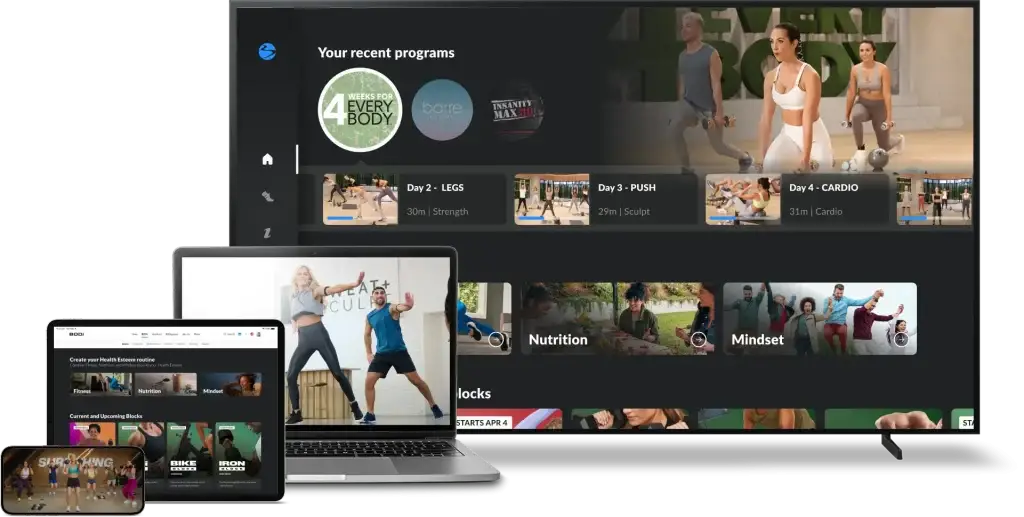
Choice overload: There’s a lot in there. That can turn into scrolling instead of sweating. My fix was choosing one plan for four weeks and ignoring the rest.
Space and equipment: Some workouts need dumbbells or a little room. I kept a small “grab-and-go” setup so I wasn’t hunting for gear like it was a remote control stuck between the couch cushions.
Subscription cost: Only you can decide if it’s worth it. I compared it to what I used to spend on unused gym memberships and “new motivation” purchases. For me, consistency made it worth paying for.
Not every program fits every body: Some styles didn’t match my joints or energy. I used modifiers, swapped workouts, and kept moving. No guilt required.
If you want BODi results too, here’s how I’d start (without going full “beast mode”)
If you want BODi results, I wouldn’t start with intensity. I’d start with a plan you can repeat when life gets noisy.
My starter approach is about building a baseline: strength, steps, mobility, sleep, and enough protein to support your workouts. That’s it. Nothing that requires a new personality.
My no drama 14 day kickoff plan you can copy
Here’s the two-week structure I’d use if I were starting from scratch today. I’m including a minimum option because “something” beats “nothing,” and I’m not interested in all-or-nothing thinking.
This table shows the targets, not a rigid schedule.
| Day type | Standard option | Minimum effective dose |
|---|---|---|
| Strength | 2 days per week, 25 to 35 minutes | 2 days per week, 10 to 20 minutes |
| Cardio or conditioning | 1 day per week, low-impact ok | 1 day per week, 10 to 20 minutes |
| Mobility or core | 1 day per week | 1 short session, even 5 to 10 minutes |
| Walking | 3 to 5 walks per week | 2 to 3 short walks |
| Full rest | 1 day per week | 1 day per week |
The takeaway: consistency beats heroics. Pick a level, hit it for 14 days, then reassess.
For tracking, I kept it simple. I used a calendar and marked an X for any day I did a workout or walk. Old-school, like a paper log, except I didn’t lose it in my gym bag next to a random AAA battery and a stale protein bar.
For recovery, I picked one habit: a consistent bedtime. Not perfect, just consistent.
The gear I actually use (because it survived real life)
I don’t do gear for the sake of gear. I use this stuff because it’s the only thing that didn’t fall apart after months of actual use.
A few pairs of dumbbells (or adjustable ones): This is my workhorse. It covers most strength workouts without turning my house into a sporting goods store.
Resistance loops or bands: These help with warm-ups, glute work, and lower-impact strength days. If you want a reference point for what works with many BODi workouts, BODi has a solid rundown of home gym equipment for different budgets.
A basic mat: It makes floor work less miserable, especially on hardwood.
A foam roller: I don’t pretend it’s magic. It just helps me feel less creaky after lifting and walking.
Full disclosure: if I share links that lead to a purchase, I may get a small kickback. It helps keep the lights on here, so I don’t have to start a “beast mode” fitness camp in a parking lot.
Conclusion
I tried BODi with a skeptical attitude and realistic expectations, and my BODi results have been very good. The biggest win wasn’t a dramatic transformation, it was consistency that held up through real life. I got stronger, felt better day to day, and found a routine I can actually maintain.
If you want to start, pick one program, commit to two weeks, and track two or three non-scale wins. Energy, mood, and strength count, even if your jeans aren’t falling off your waist quite yet. And if you manage to put on your socks without making a weird noise, put that down as a victory too.