I’ve watched fitness trends come and go like old tech. Jazzercise. Tae Bo. Even the original P90X era when everyone had a stack of DVDs next to the TV and a resistance band that smelled like rubber regret. I’ve printed MapQuest directions, missed three turns, and still felt confident I was “basically there.” That’s how a lot of fitness marketing works too, lots of confidence, not always a lot of truth.
So when someone asks me, “Is BODi worth it?” I hear the real question underneath it: “Will this actually work in my real life, with my real schedule, and my real energy level?”
I’m not a guru. I’m a guy who wants more good years, more mental clarity, and enough strength and mobility to handle whatever a random Tuesday decides to throw at me. I choose agency over aesthetics, every time.
Bottom line (TL;DR):
- BODi is worth it if you want guided, at-home workouts with structure, variety, and a clear start button.
- Skip it if you hate subscriptions, want serious barbell training, or you need in-person eyes on your form.
- It only “works” if you use it, and you don’t have to use it perfectly.

What you actually get with BODi in 2026 (and what you do not)
BODi is a fitness subscription platform, mostly known as the newer brand name many of us still connect to Beachbody. If you hear someone say “Beachbody,” they’re usually talking about the same ecosystem. The core idea is simple: follow-along workouts at home, led by trainers, organized into programs so you don’t have to plan every session yourself.
What I like about that model is it removes friction. No driving to a gym. No wandering around pretending you know what to do with a cable machine. No waiting for a squat rack while a teenager films a 14-minute pep talk to his biceps.
Here’s what’s typically included in the membership experience:
- A library of on-demand workout programs (often with calendars or suggested schedules)
- Trainers coaching you through sessions on video
- Options for different fitness levels, including beginner-friendly starts
- Some form of nutrition guidance and mindset support (more on that below)
Here’s what you shouldn’t assume is included:
- Equipment (you may need dumbbells, a mat, bands, maybe a bench depending on the program)
- Supplements or branded nutrition products (you’ll hear about them, but they’re separate purchases)
- One-on-one coaching from a local trainer or physical therapist (some community support exists, but it isn’t the same as in-person form checks)
- A magic wand for motivation (if they ever sell that, I’ll buy two)
If you want a platform that tells you what to do today, and you’re okay doing it in your living room, BODi fits that lane. If you want hands-on coaching or a powerlifting plan, it’s the wrong tool.
The workout library, formats, and how it fits real schedules
The best thing about a big workout library is variety. The worst thing about a big workout library is also variety. It’s like opening Netflix when you’re tired and spending 25 minutes scrolling, then going to bed.
In practice, BODi workouts tend to come in a range of lengths. You’ll find shorter sessions for tight days and longer sessions when life gives you a little breathing room. Styles usually cover the basics most of us need for longevity:
- Strength-focused workouts (often with dumbbells)
- Cardio and conditioning options
- Mobility and recovery sessions
- Low-impact choices that are kinder to cranky joints
What matters to me in 2026 is that workouts can fit the messy middle of life. Some days I’m a 7 out of 10 and ready to work. Other days I’m a 2 out of 10 and the biggest win is that I’m upright and wearing shoes.
This is where guided programs help. When you’re tired, decision-making is the first thing to go. A calendar that says “Press play, do this” can keep you showing up without negotiating with yourself for 45 minutes.
If you’re older, returning after a setback, or managing old injuries, you can still make progress here, as long as you treat intensity like a dial, not a badge of honor. Consistency beats intensity. Sustainable progress beats heroic effort followed by a month on the couch.
Nutrition and mindset support, helpful for some, noisy for others
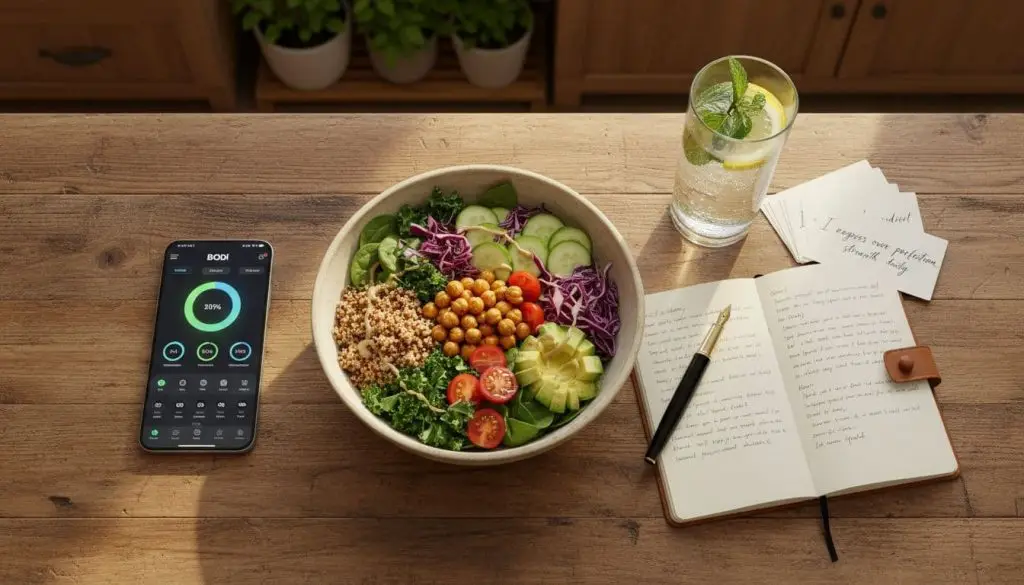
Most people don’t fail because they lack information. They fail because life is loud and they’re tired. Structure can help with that. BODi often includes nutrition frameworks and mindset-style coaching that can reduce decision fatigue, like having a default plan when your brain is fried.
For some folks, that’s a relief. For others, it can feel like noise.
My take is simple: use nutrition guidance as a guide, not a judge. If a plan makes you feel like you’re “good” or “bad” based on what you ate, that’s not Health Esteem, that’s a hamster wheel.
I care less about chasing a certain look and more about:
- steady energy through the day
- fewer crashes and cravings that feel like a toddler driving a car
- better sleep
- mental clarity
- a sense that I’m in charge again
Mindset content can support that, especially if you’re the type who does better with encouragement and routine. If you’re the type who gets irritated by motivational language, you can keep it simple and focus on the workouts. Nobody’s grading you.
If nutrition is a sensitive area for you, I’d rather you keep things boring and steady than strict and dramatic. Boring is underrated. Boring is how you build a foundation.
So, is BODi worth it for you? A simple way to decide in 10 minutes
When people ask, “Is BODi worth it,” they often want a yes or no. I get it. We’re all tired, and we don’t want another subscription we feel guilty about.
Here’s the quickest way I know to decide, without turning it into a personality test. Give yourself 10 minutes, answer honestly, and don’t argue with your own answers.
Ask yourself two things:
- Do I need structure to show up?
- Will I realistically do video workouts at home?
If the answer to both is yes, BODi has a strong chance of being worth it. If either answer is no, you might be forcing a fit.
Here’s a short checklist I’d use:
- I want workouts I can do at home, without driving anywhere.
- I prefer someone to coach me through the session.
- I’m more consistent when I follow a plan.
- I’m okay repeating a program for weeks instead of bouncing around.
- I have space for a mat and a little movement.
- I don’t need perfect, I need repeatable.
Dealbreakers matter too. The best plan is the one you can repeat when life gets messy. That’s the whole point. Agency over aesthetics means you’re picking a tool that works for your life, not a tool that looks impressive on paper.
BODi is probably worth it if you want structure without driving to a gym
I’ve seen BODi work well for busy people who don’t want to think too hard at 6 a.m. It can also work for people rebuilding confidence after a rough season, because the plan is already there. You just show up and follow along.
It’s a good fit if:
- You like follow-along coaching: You don’t want to design workouts, you want to do them.
- You want variety without planning: Strength, cardio, mobility, low-impact, it’s all there.
- You prefer at-home convenience: No commute, no gym anxiety, no weather excuses (unless your basement floods, then you’re excused).
- You do better with a schedule: A program calendar keeps you from winging it every day.
- You want guided strength and mobility: Especially if your joints have opinions now.
Community accountability can be a plus too, if that’s your thing. Some people thrive with it. Some people prefer to work out quietly like a raccoon, alone, at odd hours. Both are valid.
I would skip BODi if you hate subscriptions, want heavy lifting, or need in-person coaching
Different tools for different jobs. If you already love building your own training plan, a guided platform can feel restrictive. If you want to focus on heavy barbell training, you may outgrow what most follow-along programs can offer at home.
I’d skip it if:
- You can’t stand recurring subscriptions: Even a good product becomes annoying if you resent paying for it.
- You want barbell-first training: Squat racks, deadlifts, progressive loading, that gym path is cleaner.
- You need in-person form help: If pain or past injuries are in the mix, eyes on you matters.
- Big libraries overwhelm you: Too many choices can lead to “I’ll start Monday” forever.
- You won’t watch video workouts: If you hate screens during exercise, don’t force it.
If you need medical or rehab guidance, I’d rather you start with a clinician and a plan built for you. A subscription can be great, but it’s not a physical therapist. For general exercise safety, I trust resources like Harvard Health Publishing’s exercise and fitness guidance and Mayo Clinic’s fitness and exercise information.
People fixate on price like it’s the main issue. Usually it isn’t. The real issue is friction. The little stuff that makes you stop using the thing you paid for.
Common friction points I’ve seen with platforms like BODi:
Choice overload. Program hopping. Expecting motivation to arrive before you start. Treating every missed workout like a moral failure. That last one is especially expensive.
If you want it to be worth the money, you need a boring plan that you can repeat. Not the “perfect” plan. The repeatable one.
I also think it helps to set expectations. You’re paying for convenience, coaching, and structure. You’re not paying for someone to carry you to the mat. You still have to press play.
The “cost per workout” test (the only math that matters)
I’m not here to argue about exact pricing because it changes, and it’s not the point. The point is usage.
Do this instead: estimate your monthly cost, then divide it by how many workouts you’ll actually do.
Here’s an example with round numbers:
| If you pay about | And you do | That’s roughly |
|---|---|---|
| $20 per month | 12 workouts (3 per week) | $1.67 per workout |
| $20 per month | 8 workouts (2 per week) | $2.50 per workout |
| $20 per month | 4 workouts (1 per week) | $5.00 per workout |
Compare that to a single boutique class, or compare it to the cost of doing nothing (stiffer joints, worse sleep, lower mood, and that nagging sense you’re not in the driver’s seat).
The “worth it” line is personal. For me, if a plan keeps me consistent, the return is huge. Not because it makes me impressive, but because it keeps my foundation solid when life gets windy.
How I would start if I was tired, sore, or coming back after a setback
If you’re coming back after illness, injury, burnout, or just a long stretch of life happening, I wouldn’t start with a heroic plan. I’d start with something so doable it almost feels silly.
Here’s my gentle first week approach:
- Pick one beginner-friendly program and commit to it for seven days.
- Do 3 workouts total, not seven. Leave room for recovery.
- Add two walks, even short ones.
- Add 5 to 10 minutes of mobility on off days.
And here’s the hall pass, because we all need one: Today might be a wash. If you’re currently upright, you’ve hit your quota. Let’s aim for minimal technical difficulties and call it a win.
I’ve had seasons, including after cancer treatment, where my “workout” was walking to the mailbox and back. Some days, the mailbox wins. It happens. You don’t lose points in my book for being human. You aren’t off track, you’re just at a red light. The light changes.
If you have major health issues, new pain, or concerns about safety, check in with a clinician first. That’s not fear talking, that’s respect for your body.
Conclusion: My grounded answer to “Is BODi worth it?”
BODi can be worth it, and it can also be a dusty app you forget about. The difference is not willpower. It’s matching the tool to your life, then not overdoing it so that you keep showing up.
Here’s what I’d remember:
- It helps if you want at-home structure, guided workouts, and a plan you can follow.
- It doesn’t help much if you want heavy barbell training or in-person coaching.
- It works best when you pick one program and repeat it long enough to adapt.
- Hard days count, even if all you do is the warm-up.
If you’re on the fence, choose one program, schedule the first workout, and treat it like brushing your teeth, not a personality test. That’s how sustainable progress starts, and it’s how we keep our agency when life gets loud.