Back in the late 90s, I remember watching those late-night infomercials for gut-busting gadgets while I sat on my floor eating an entire feast from Taco Bell I spent $3.50 on. Back then, “fitness” meant chasing a bicep peak or trying to look like the guy on the supplement bottle, all while trying to find a shortcut on how to get there. But life has a funny way of shifting your priorities: it usually happens right around the time your back starts making more noise than your floorboards and you realize functional fitness is the only thing that actually matters.
The Bottom Line: For those of us who have weathered a few storms, whether it’s a health scare or just the accumulation of decades, functional fitness isn’t about looking good in a mirror. It’s about having the agency and physical independence to live your life without asking for permission.
I’ve spent plenty of time in hospital waiting rooms and gym basements, and I’ve realized that being able to bench press a Buick doesn’t mean much if you can’t get a heavy suitcase into an overhead bin or pick up your grandkids without a “pre-game” ibuprofen. Functional fitness is the foundation of what I call “Health Esteem.” It’s the un-glamorous, sustainable progress that keeps us in the game for the long haul. It might be “un-fun” to practice your hinge patterns when you’d rather be doing something flashy, but it’s the difference between staying mobile and being sidelined.
THE “BIG 3” FOR STAYING IN THE GAME
Forget the heavy barbells for a second: we’re talking about the movements that keep you independent. That’s what functional fitness is all about. These are the three things I do to make sure I’m not the guy who needs a hand getting out of a low sofa.
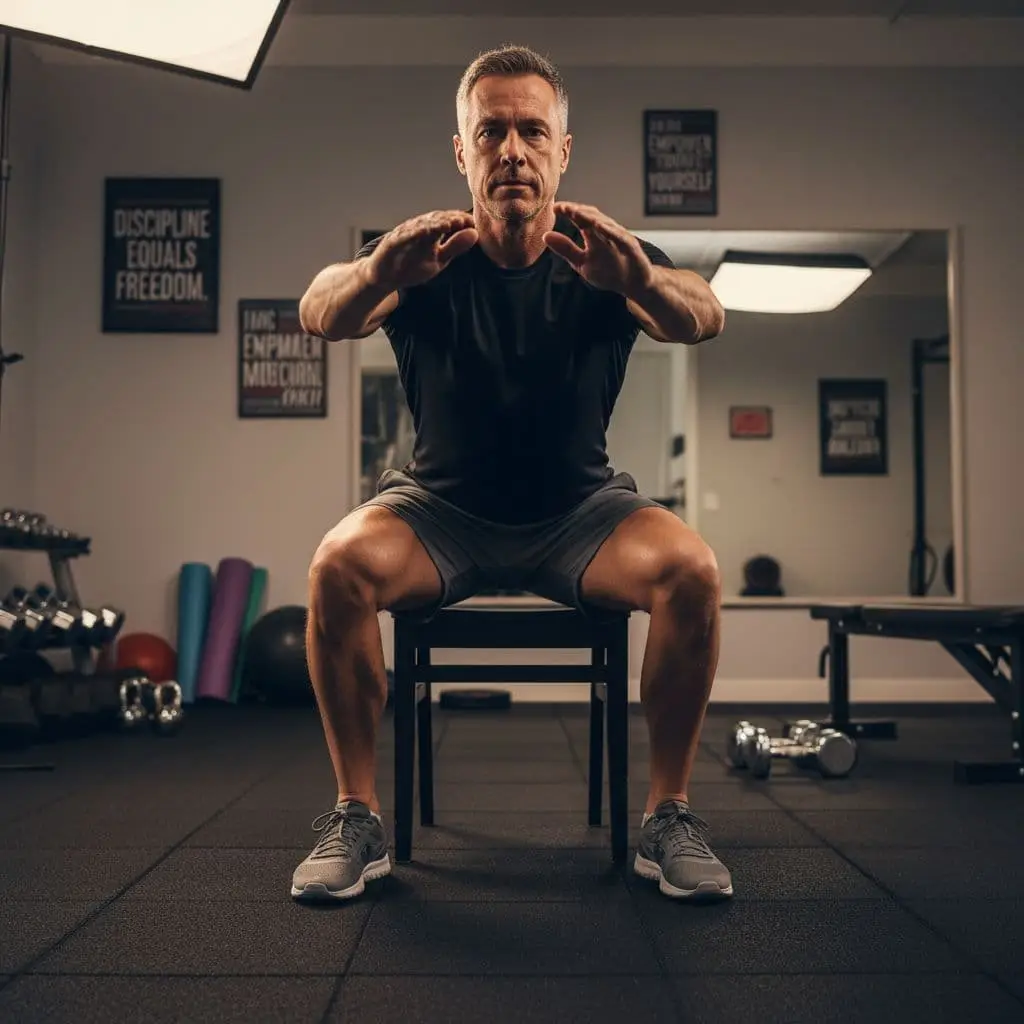
- THE CHAIR SQUAT (SIT-TO-STAND): This is the ultimate “staying independent” move. Harvard Health points out that if you don’t use your muscles, they’ll lose their strength, and nothing says “independence” like getting out of a car or a chair without a groan. Stand in front of a sturdy chair, feet hip-width apart, and lower yourself until your tailbone just grazes the seat. Then, drive through your heels to stand back up. No hands, no momentum: just leg power.
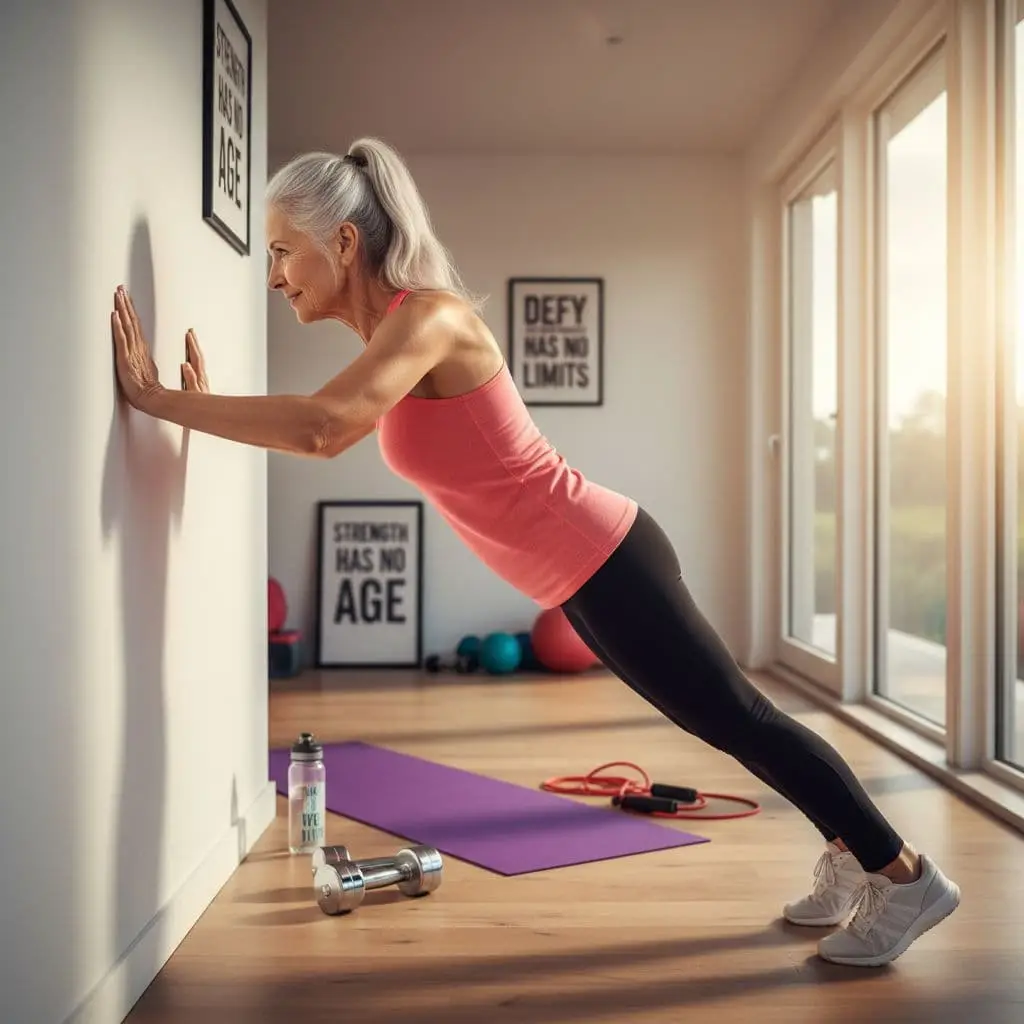
- THE WALL PUSH-UP: I’ve seen guys blow out their shoulders trying to bench press like they’re 22 again. We don’t need that. The wall push-up is a gentle way to keep the strength you need to push open a heavy revolving door or brace yourself if you stumble. Stand an arm’s length from the wall, palms flat, and lower your chest slowly. It’s about control and keeping your foundation solid.
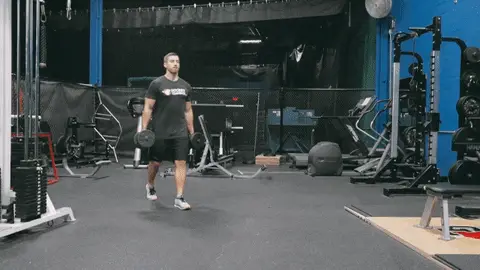
- THE FARMER’S WALK (CARRYING): This is just fancy gym-talk for carrying your groceries in one trip. Grab a couple of dumbbells, heavy milk jugs, or a suitcase in each hand and walk tall for 30 seconds. This builds grip strength and core stability, which are the two things that usually fail us first. It’s not flashy, but it’s the difference between carrying your own gear and watching someone else do it for you.
DAVE’S REALITY CHECK: THE STUFF NO ONE TELLS YOU
Look, I’m going to give it to you straight: some days, this stuff is just “un-fun.” You’re going to wake up stiff, your knees might click like a geiger counter, and you’ll wonder why you’re doing chair squats instead of just watching the game.
Here is the reality: fitness at our age isn’t a highlight reel. It’s a maintenance plan. You aren’t training for a bodybuilding trophy; you’re training so that when life throws a “curveball” your way, like a slick sidewalk or a heavy box of old photos, you have the functional movement in your back pocket to handle it.
Google will tell you about “getting ripped” or “beast mode,” but the truth is simpler: if you don’t move your body, you’re no different than a car sitting in a lot getting rusty. Functional fitness is the WD-40 for your joints. It’s about showing up even when you don’t want to, because the alternative, losing your agency, is a much harder pill to swallow.
THE “DAY ZERO” PLAN: HOW TO START WHEN YOU’RE STARTING OVER
If you haven’t broken a sweat since the days of corded wall phones, don’t worry about it. We aren’t trying to make up for lost time in one afternoon. That is a one-way ticket to a pulled hamstring and a week on the heating pad. We want sustainable progress, not a crash course. The goal here is to introduce functional fitness at a pace your joints actually appreciate. Think of this as a slow-motion comeback: we are rebuilding your ability to move through the world with confidence, one small win at a time, rather than trying to win a gold medal by sunset.
- START WITH THE FIVE-MINUTE RULE: Set a timer on your microwave or your watch for five minutes. Walk around the house or just march in place while the coffee brews. If you feel like stopping after five minutes, stop. The goal isn’t the distance: it is the act of showing up.
- THE “ONE-FOR-ONE” HABIT: Every time you go to sit down on your favorite recliner, stand back up and sit down one extra time. That is your first squat.
- AUDIT YOUR MOVEMENT: Just notice how you move. Are you using your arms to heave yourself out of bed? Becoming aware of your body is the first step toward gaining Agency over Aesthetics.
- CONSULT THE PROS: Since I’m just a guy who survived a few rounds with the big “C” and some bad gym advice, talk to your doctor first. The National Institute on Aging has some solid advice on starting slow if it has been a decade or two since your last workout.
THE BOTTOM LINE: It’s YOUR MOVE
I’ve spent enough time in hospital gowns to know that we don’t own our health: we just rent it, and the rent is due every day. You don’t need “beast mode” or a “no excuses” attitude. You just need to decide that you’re worth the effort.
Don’t wait for Monday or a New Year’s resolution that will be dead by February. Stand up, move for five minutes, and prove to yourself that you’re still in the game.